
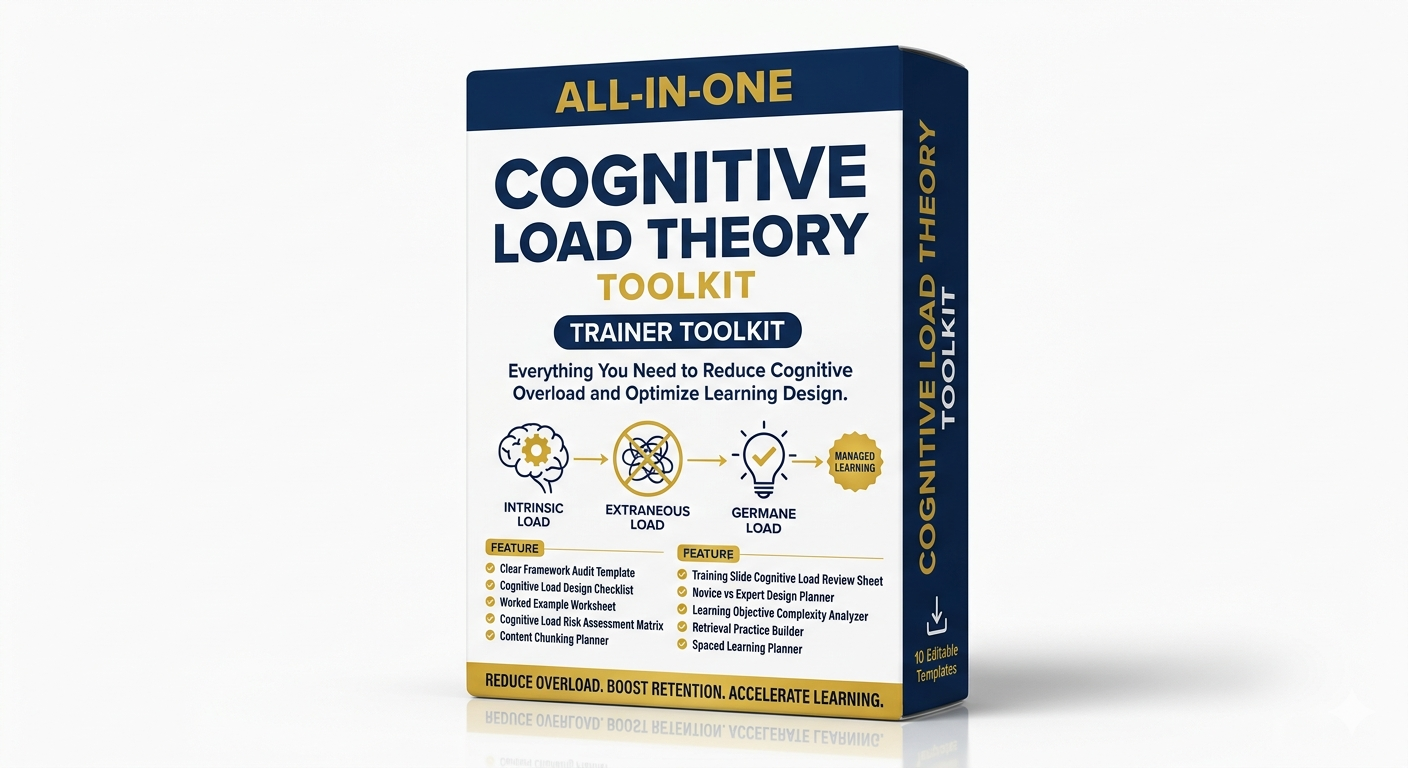
Download the Ultimate Cognitive Load Theory Toolkit
Design Training That Learners Can Actually Process, Retain, and Apply
Most training programmes fail for a simple reason: they ask learners to process more information than their working memory can handle.
The result?
- Information overload
- Poor retention
- Low engagement
- Weak transfer to the workplace
- Frustrated learners and stakeholders
The Cognitive Load Theory Practitioner Toolkit gives trainers, instructional designers, and L&D professionals a complete set of practical tools to identify, reduce, and manage cognitive overload before it affects learning outcomes.
Built around the principles of Cognitive Load Theory (CLT), this toolkit helps you design training that works with the brain rather than against it.
Whether you’re building instructor-led training, eLearning, onboarding programmes, compliance training, or performance support resources, these tools provide a repeatable framework for creating more effective learning experiences.
What’s Inside?
1. C.L.E.A.R. Audit Template
A complete Cognitive Load Theory review system for evaluating training programmes before launch.
Use it to identify:
- Excessive intrinsic load
- Extraneous cognitive load
- Poor sequencing
- Weak learner readiness
- Retention risks
Includes:
- Five-phase audit framework
- Scoring system
- Risk assessment
- Action planning section
2. Cognitive Load Design Checklist
A one-page quick-reference guide covering the most important CLT design decisions.
Perfect for:
- Instructional designers
- Facilitators
- eLearning developers
- Content reviewers
Use it during every design project to ensure your training aligns with cognitive science principles.
3. Worked Example Worksheet
Create powerful worked examples that accelerate learning and reduce cognitive overload.
Includes:
- Learning objective planning
- Step-by-step demonstration structure
- Annotation framework
- Guided practice design
- Independent practice transition
Ideal for technical, procedural, software, compliance, sales, and operational training.
4. Cognitive Load Risk Assessment Matrix
Assess potential cognitive overload before development begins.
Evaluate:
- Content complexity
- Learner experience level
- Information density
- Assessment difficulty
- Required recall demands
Provides an overall Cognitive Load Risk Score and recommendations.
5. Content Chunking Planner
Transform dense SME content into manageable learning units.
Use this tool to:
- Break complex topics into cognitive chunks
- Sequence content logically
- Improve learner processing
- Build effective learning pathways
Perfect for onboarding, systems training, and compliance programmes.
6. Training Slide Cognitive Load Review Sheet
A structured review tool for classroom training and presentations.
Evaluate every slide for:
- Text overload
- Redundancy
- Split attention
- Visual clutter
- Signalling effectiveness
- Learning objective alignment
Stop cognitive overload before learners ever see the deck.
7. Novice vs Expert Design Planner
Apply the Expertise Reversal Effect to create learning experiences tailored to different audiences.
Plan:
- Guidance levels
- Scaffolding
- Worked examples
- Practice activities
- Job aids
- Assessment approaches
Avoid the common mistake of designing one-size-fits-all training.
8. Learning Objective Complexity Analyzer
Combine Bloom’s Taxonomy with Cognitive Load Theory to design more realistic learning journeys.
Analyze:
- Learning objective difficulty
- Intrinsic load level
- Prior knowledge requirements
- Scaffolding needs
- Recommended practice strategies
A powerful planning tool for instructional designers and learning consultants.
Who Is This Toolkit For?
This toolkit is designed for:
✓ Corporate Trainers
✓ Instructional Designers
✓ Learning Experience Designers (LXDs)
✓ L&D Managers
✓ Training Consultants
✓ HR and Capability Teams
✓ eLearning Developers
✓ Learning Architects
✓ Independent Training Professionals
What Problems Does This Toolkit Solve?
Many learning professionals struggle with:
- Content-heavy training programmes
- SME information overload
- Low learner retention
- Poor engagement scores
- Training that doesn’t transfer to workplace performance
- Difficulty applying learning science principles in real projects
This toolkit bridges the gap between theory and implementation.
Instead of simply understanding Cognitive Load Theory, you’ll have practical tools for applying it immediately.
Why This Toolkit Is Different
Most Cognitive Load Theory resources explain the research.
This toolkit helps you use it.
Every template has been designed for real-world workplace learning environments and can be adapted for:
- Instructor-led training
- Virtual instructor-led training
- eLearning
- Blended learning
- Onboarding programmes
- Compliance training
- Product training
- Technical skills development
- Leadership development
Format
- Editable Excel Templates
- Fillable Worksheets
- Printable Checklists
- Instructional Design Planning Tools
Instant Digital Download
Start Designing Training That Respects How the Brain Learns
Cognitive Load Theory is one of the most evidence-based frameworks in learning science.
The challenge isn’t understanding the theory.
The challenge is applying it consistently.
The Cognitive Load Theory Practitioner Toolkit gives you the practical tools to do exactly that.
Download today and start building training that learners can process, remember, and apply.
Reviews
There are no reviews yet.